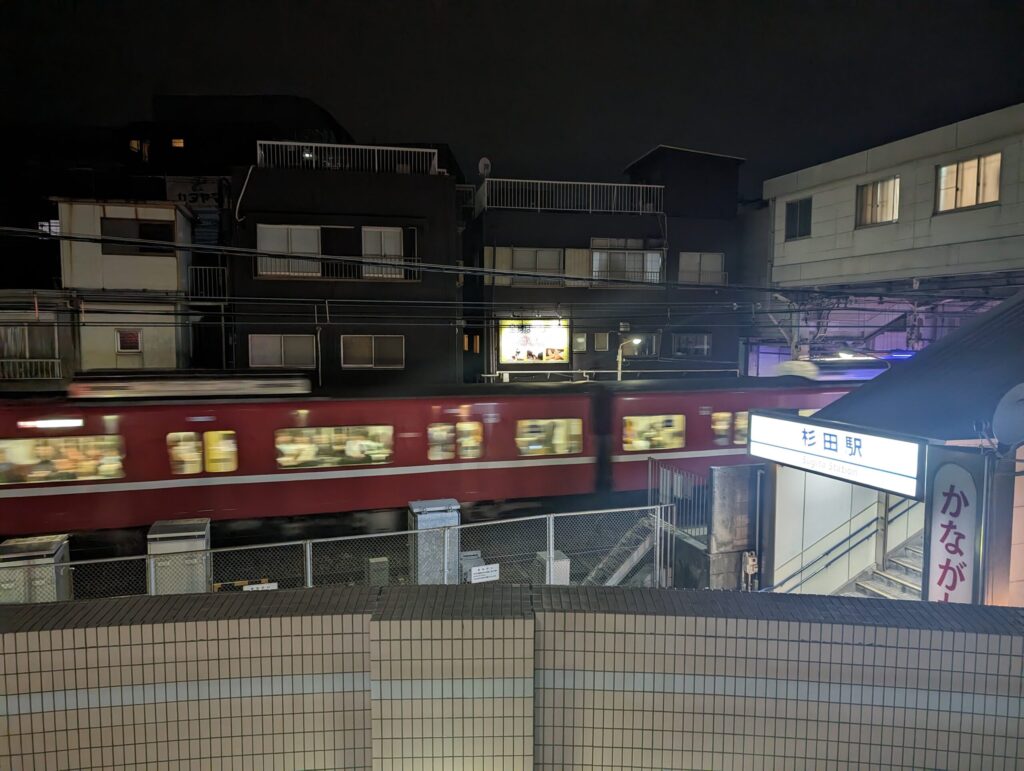
Both my husband and I carry work-related stress.
On weekdays, we’re both stretched thin juggling work and household chores. By Saturday morning, we’ve finished the accumulated chores and errands, and we make time to go for a walk at least in the afternoon. Our Saturday walks, Saturday night izakaya visits, Sunday morning lie-ins, and Sunday evening historical drama –NHK Taiga Dorama–viewing are our only small sources of solace.
Living in Tokyo, our walks sometimes take us around our neighborhood, or we’ll take a train for just under an hour to head out to the suburbs. We often go towards Yokohama. While Yokohama Port is wonderful, we especially like wandering around areas a bit further towards the Miura Peninsula (Yokohama’s Kanazawa Ward, Yokosuka City). There’s the sea, there are mountains, and if we take the bus, we can even head towards Kamakura city.
We live in a rental apartment in Tokyo. For us in our 50s, how long we can (or will) work, when we retire, and where we’ll live after caring for our parents are major questions. This area around Kanazawa Ward in Yokohama and Yokosuka City is one of our potential retirement locations.
Retirement is still a ways off. But forgetting work and daily chores, talking about “We’d love to live somewhere like this someday,” imagining it, walking through unfamiliar towns, and stopping at local izakayas is the ultimate bliss for us. Alright, let’s head to the Yokohama area again today.
At the massive terminal station, Yokohama Station, we transfer to the Keikyu Line (pronounced “Keikyuu”), known for its distinctive red cars. The KEIKYU runs from Sengakuji Station in Tokyo (Shinagawa Ward) to Uraga in Yokosuka (where Commodore Perry’s American fleet, the Black Ships, arrived in 1853. Their arrival prompted the Edo Shogunate to end its isolationist policy). After passing Yokohama Station, it’s known for running through steeply sloped hilly terrain. As you approach Yokosuka, you can see the sea.
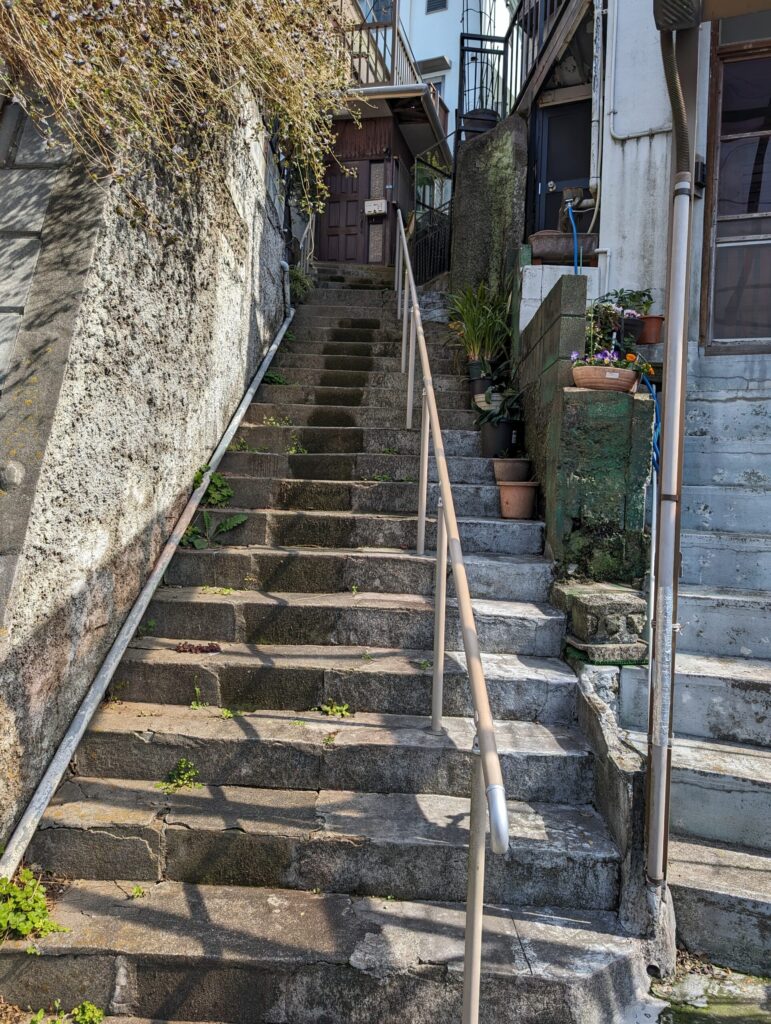
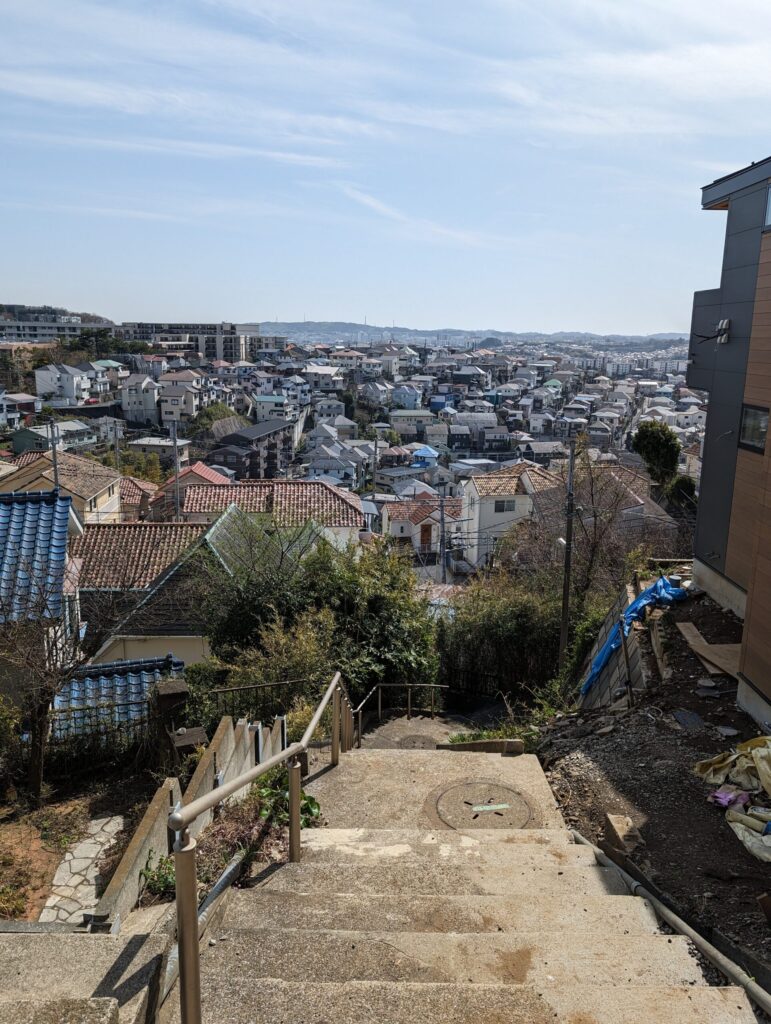
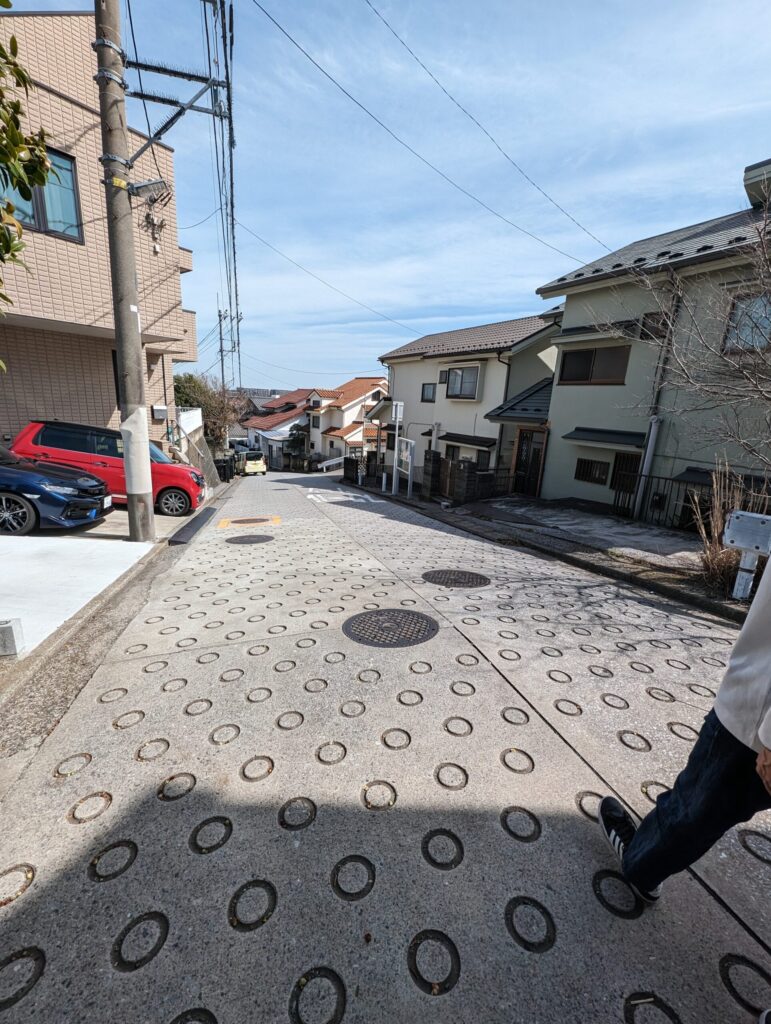
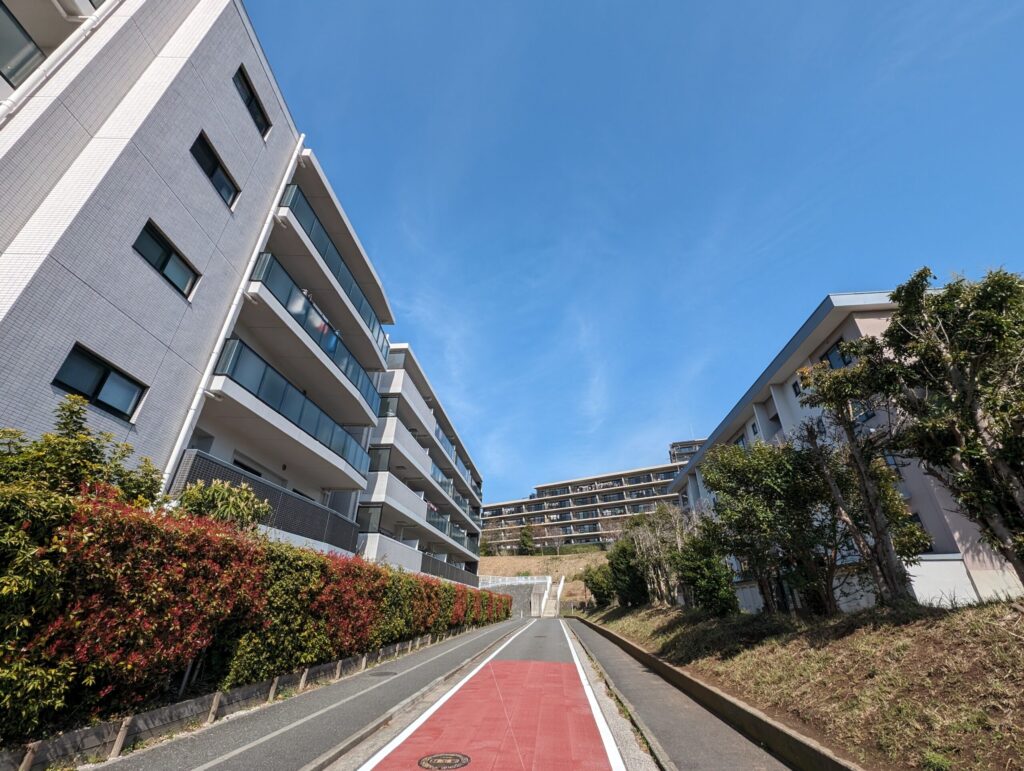
From Yokohama Station, take the express train to the next stop, Kamiooka Station (Kōnan Ward, Yokohama City). Immediately upon exiting, you walk through a residential area packed with steep slopes. Look at this sky castle-like view. The residents here must have incredibly strong legs and backs.
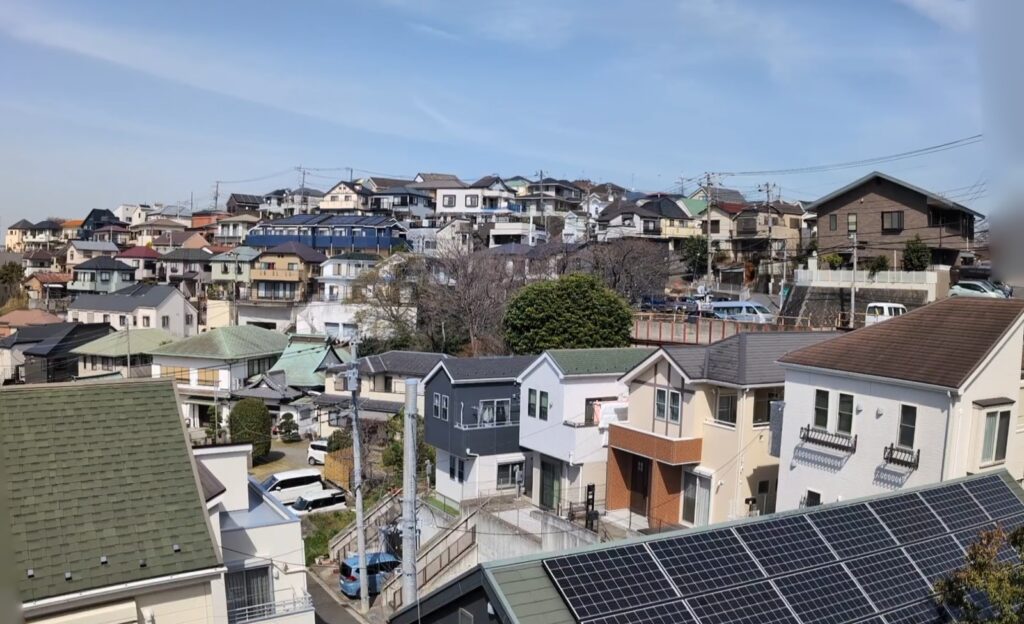
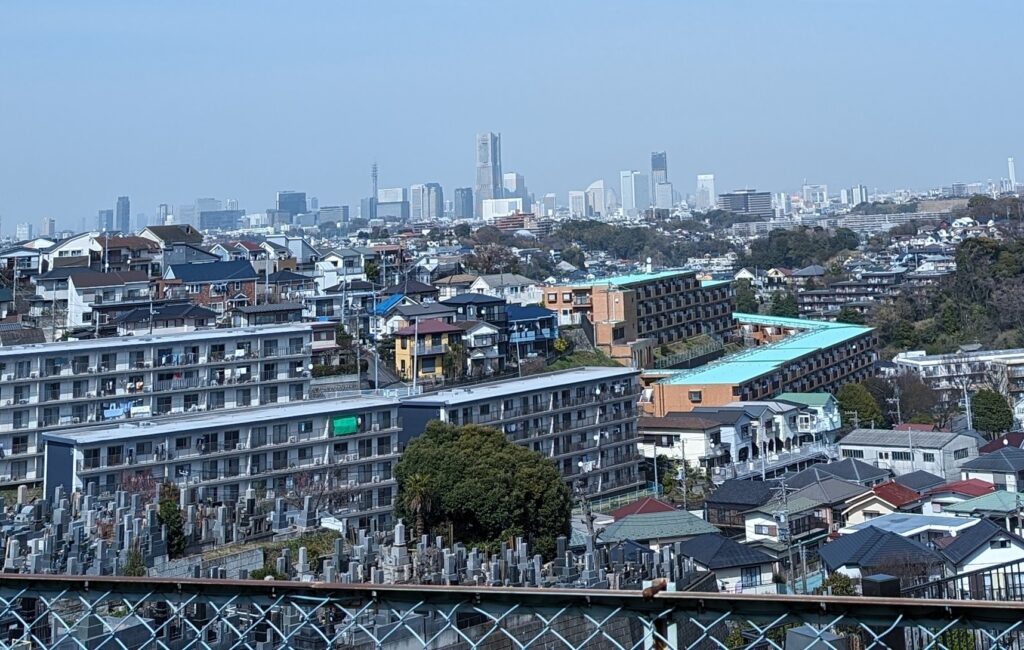
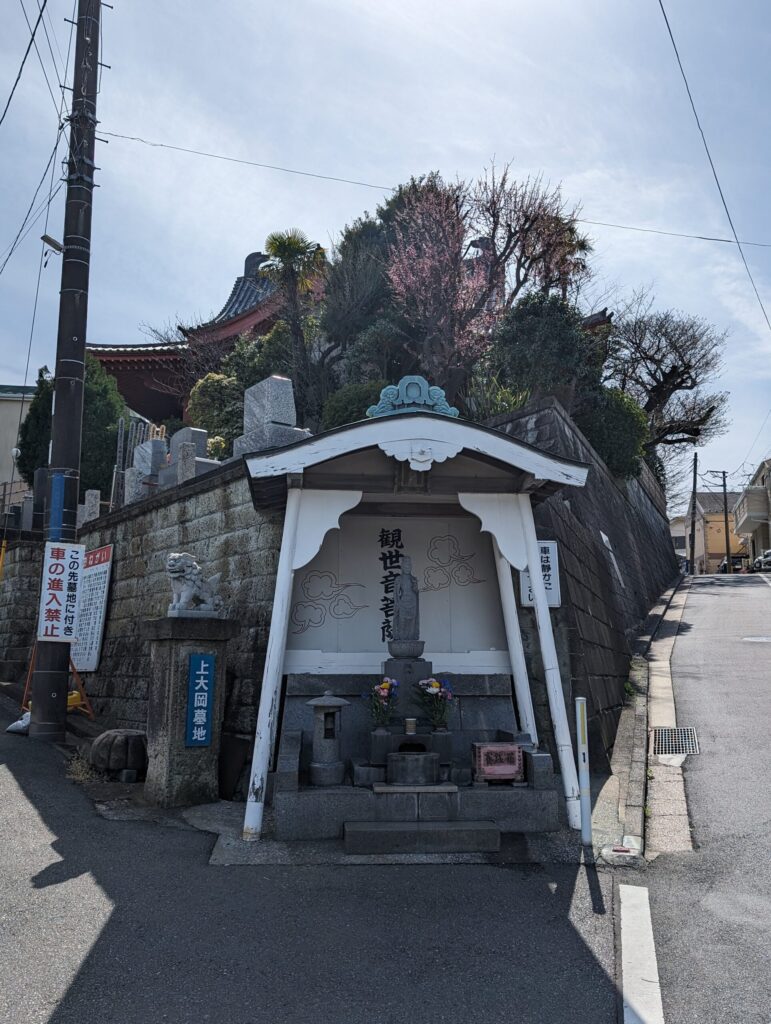
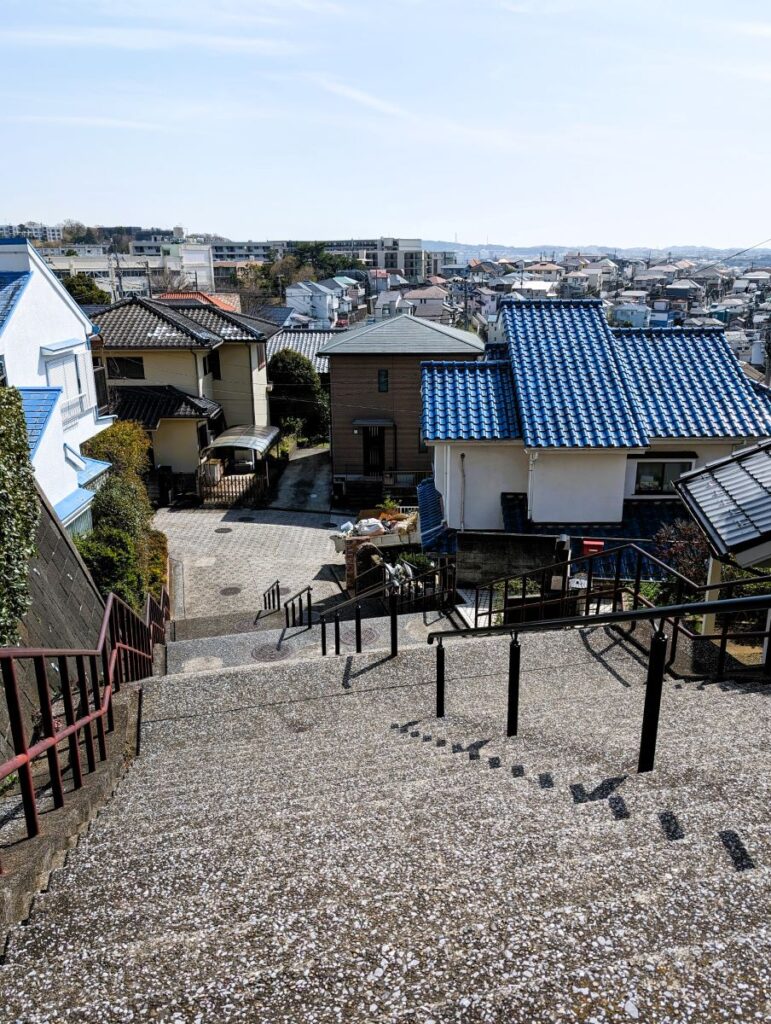
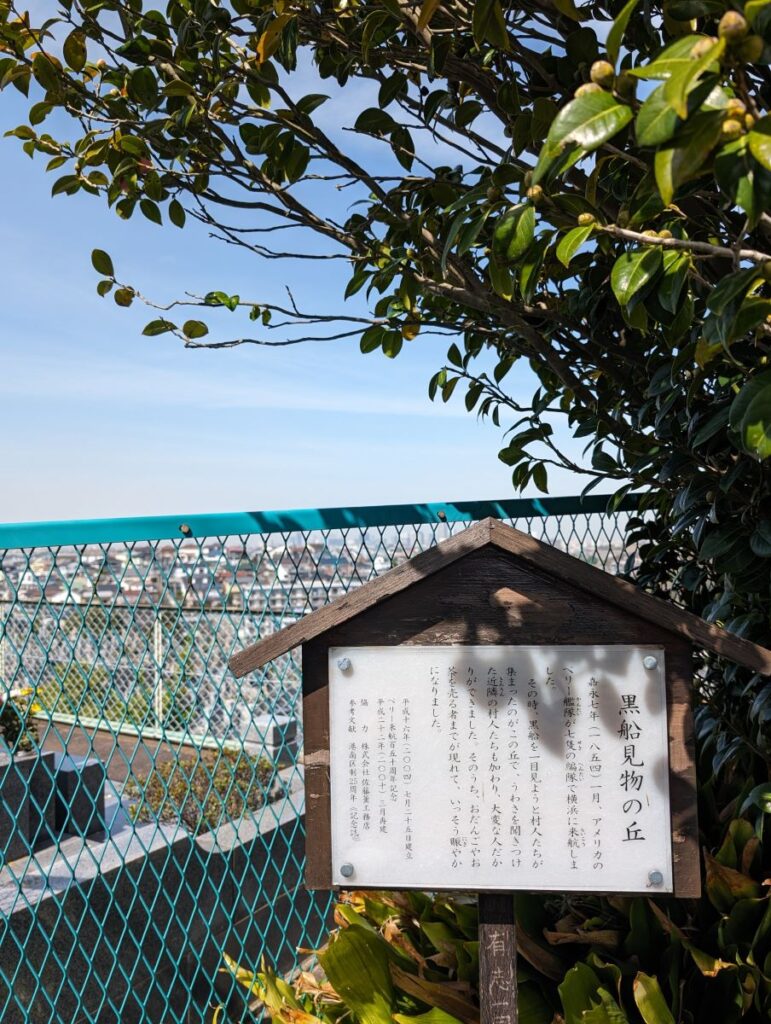
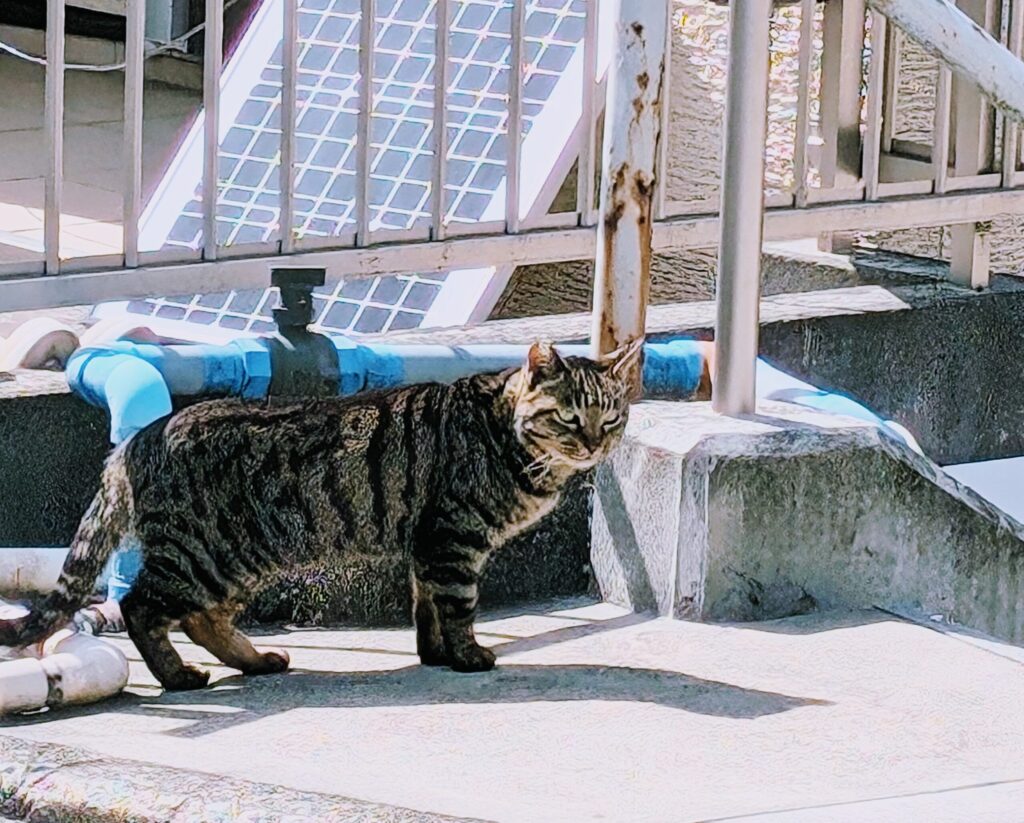
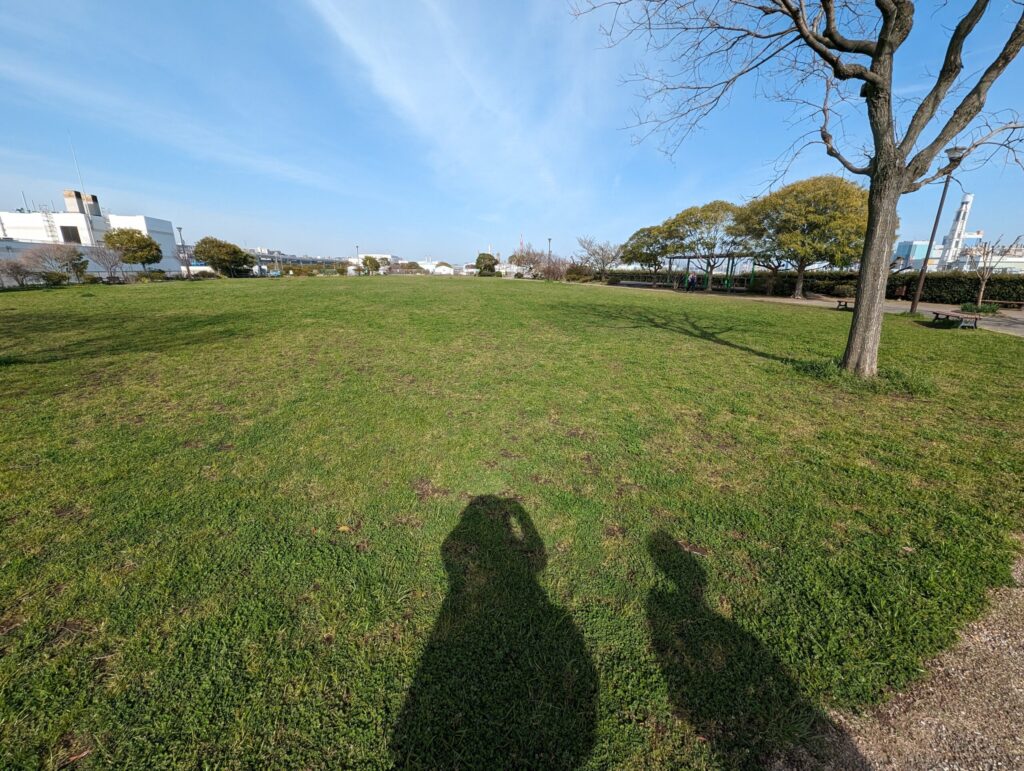
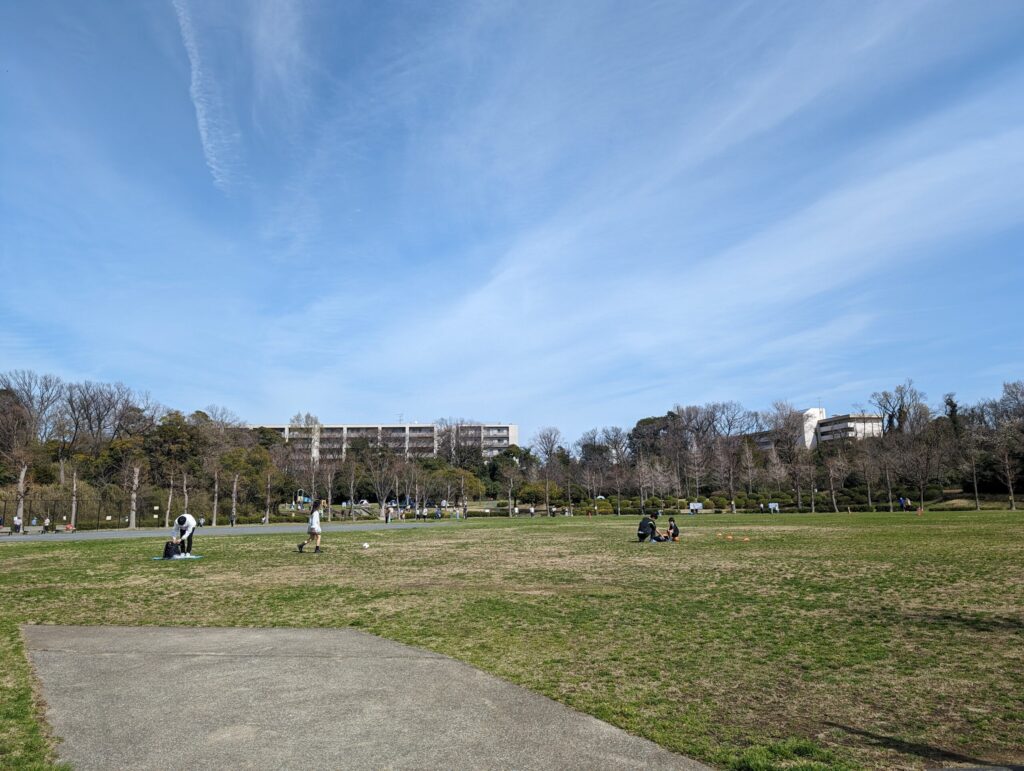
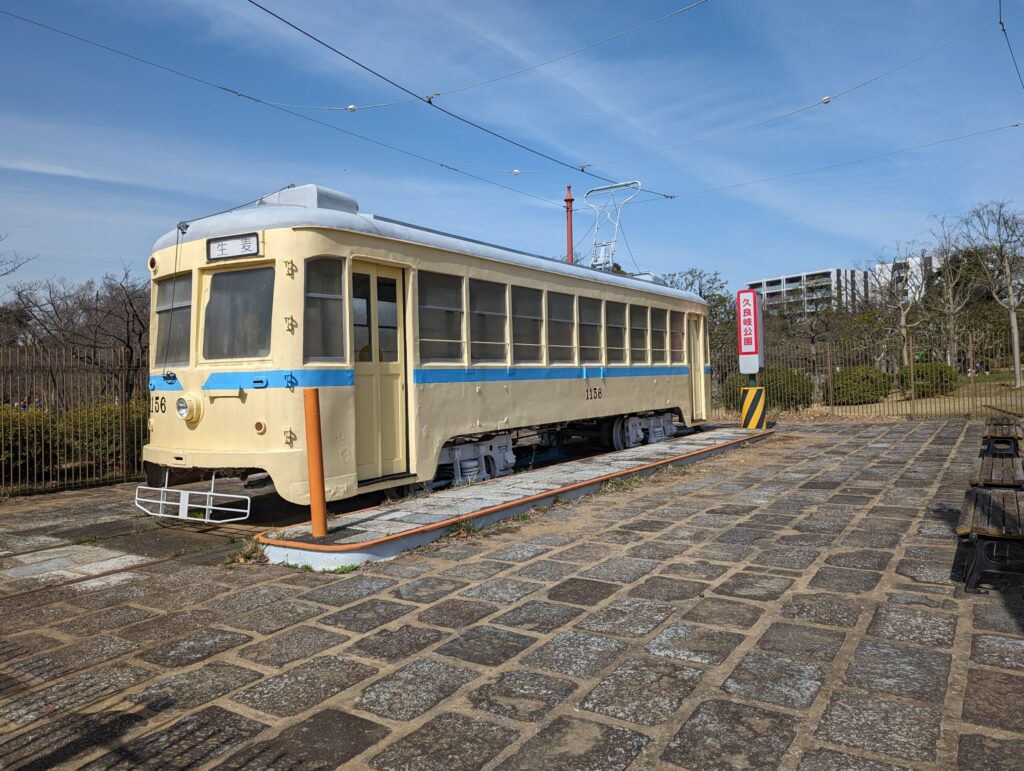
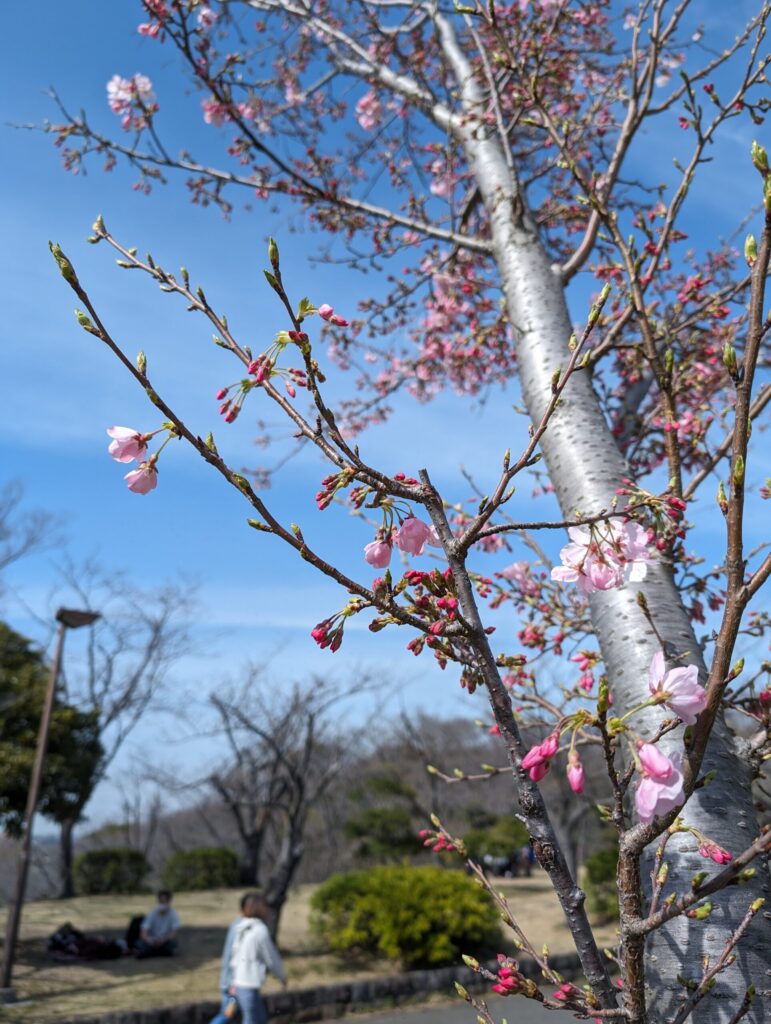
Along the way, you suddenly emerge into a wide open space: Kuraki Park. Take a short break here. The time is late March 2024. Cherry blossom season is just around the corner.
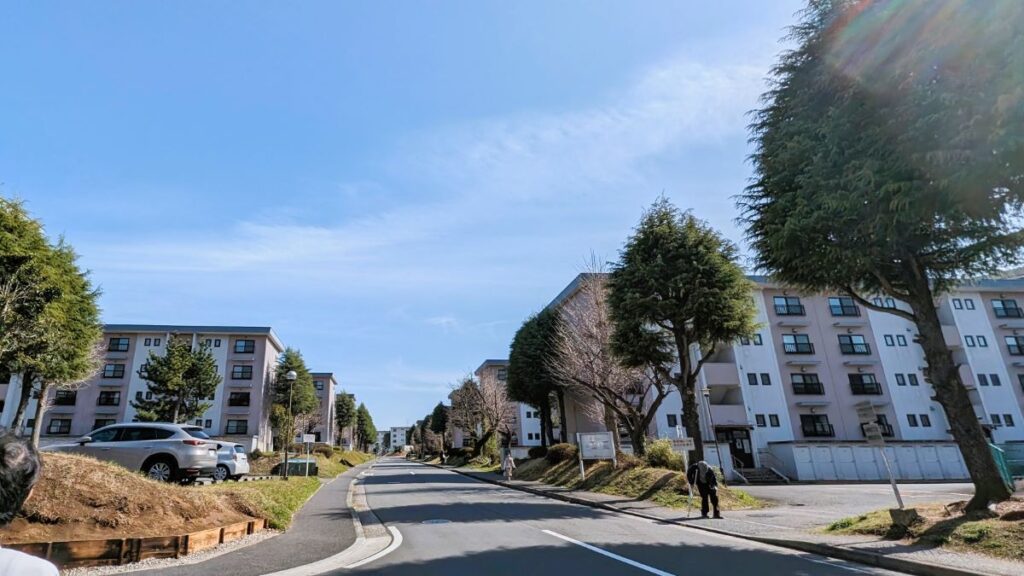
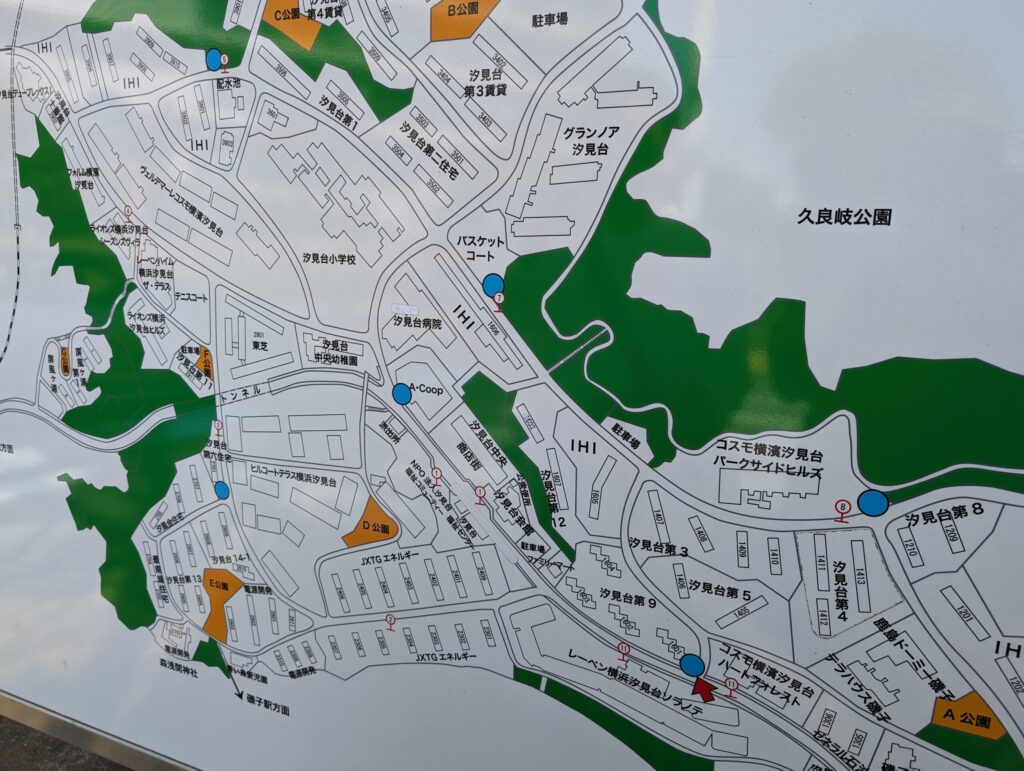
Here’s a bit about Yokohama City. This popular area, home to about 3.8 million people, is divided into 18 administrative wards (Tsurumi Ward, Kanagawa Ward, Nishi Ward, Naka Ward, Minami Ward, Konan Ward, Hodogaya Ward, Asahi Ward, Isogo Ward, Kanazawa Ward, Kohoku Ward, Midori Ward, Aoba Ward, Tsuzuki Ward, Totsuka Ward, Sakae Ward, Izumi Ward, Seya Ward). Each has its own characteristics, such as industrial zones, rural areas, and port districts. From Minato Ward, we’ll now head down towards the coastal area of Isogo Ward.
In this part of Isogo Ward, there used to be a famous luxury hotel called the Isogo Prince Hotel, but it’s now been converted into apartments. From the high ground, you can see oil tankers and other ships lined up in the sea. This is an industrial zone.
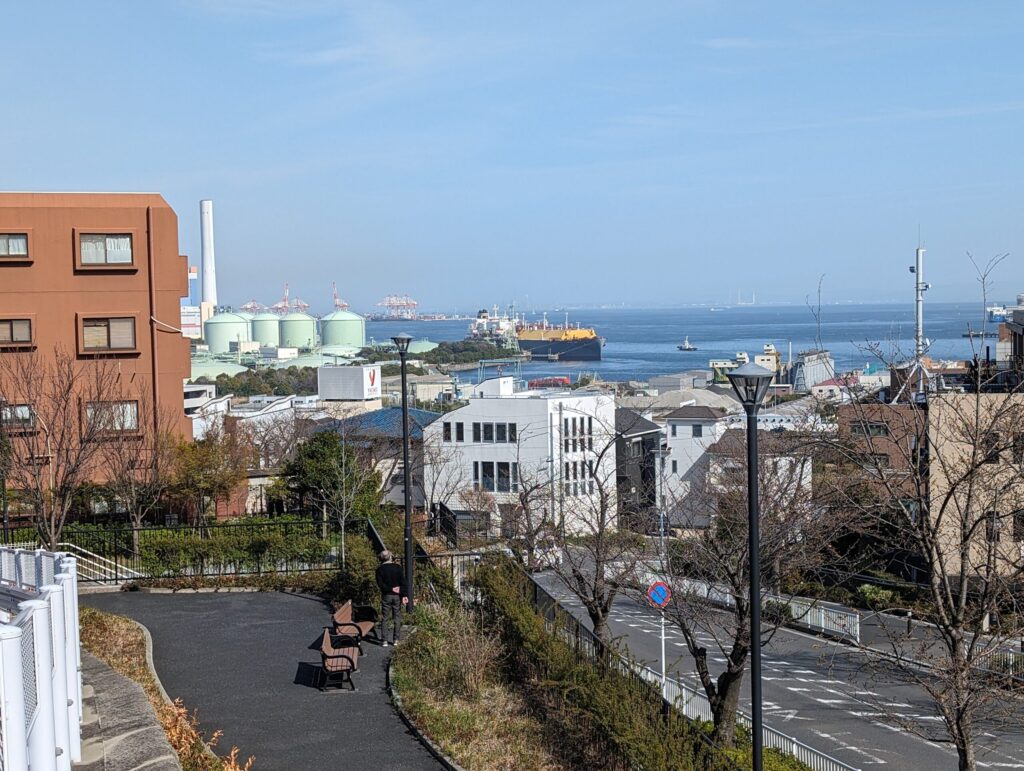
“With all these hills, living here when we’re older would be impossible,” my husband remarked.
“But the abundance of sea and mountains is appealing, right?” I replied. He agreed.
If we lived here, would we shop at this supermarket? Could we read books on the park benches here? Our vague dreams expanded.
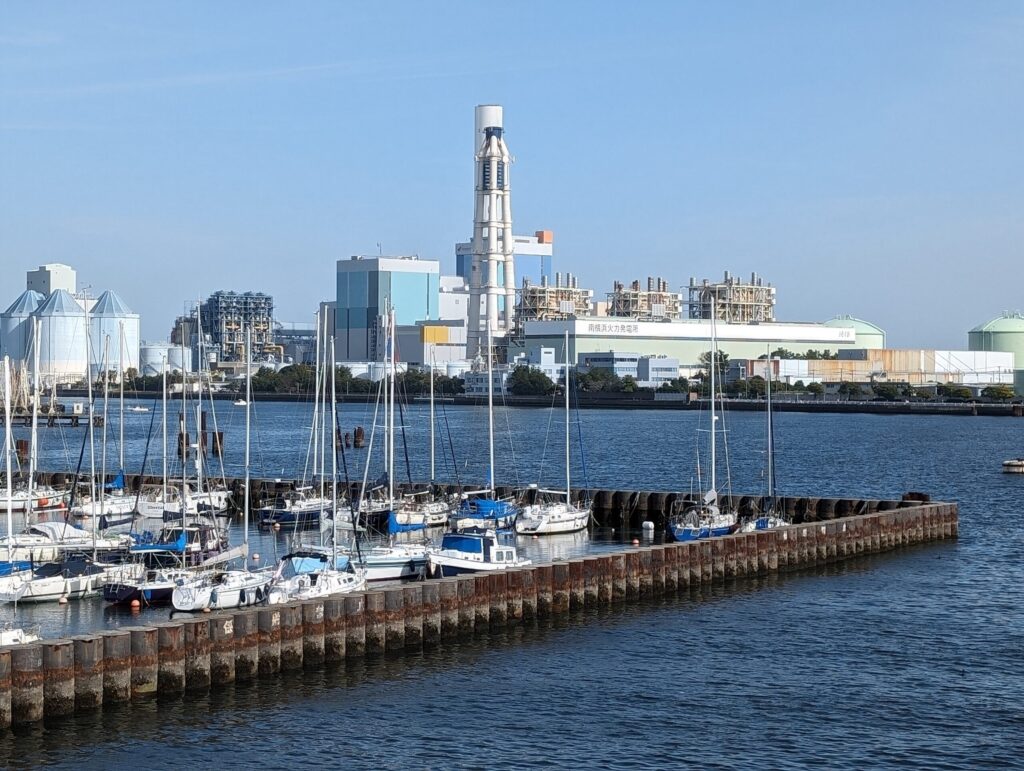
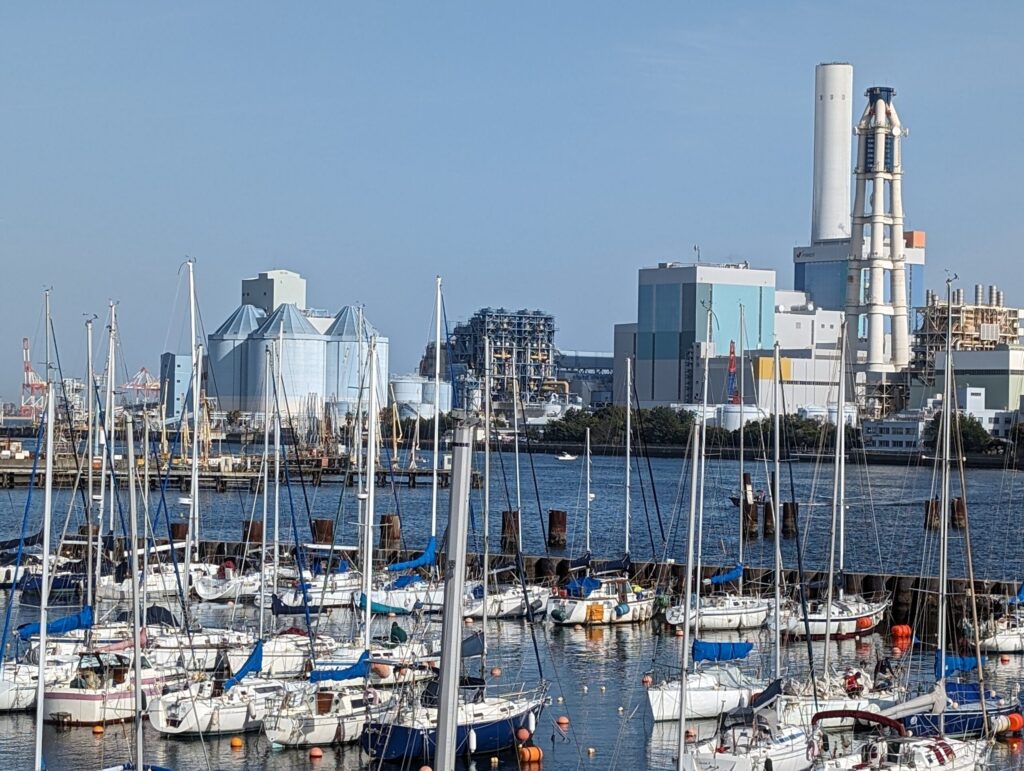
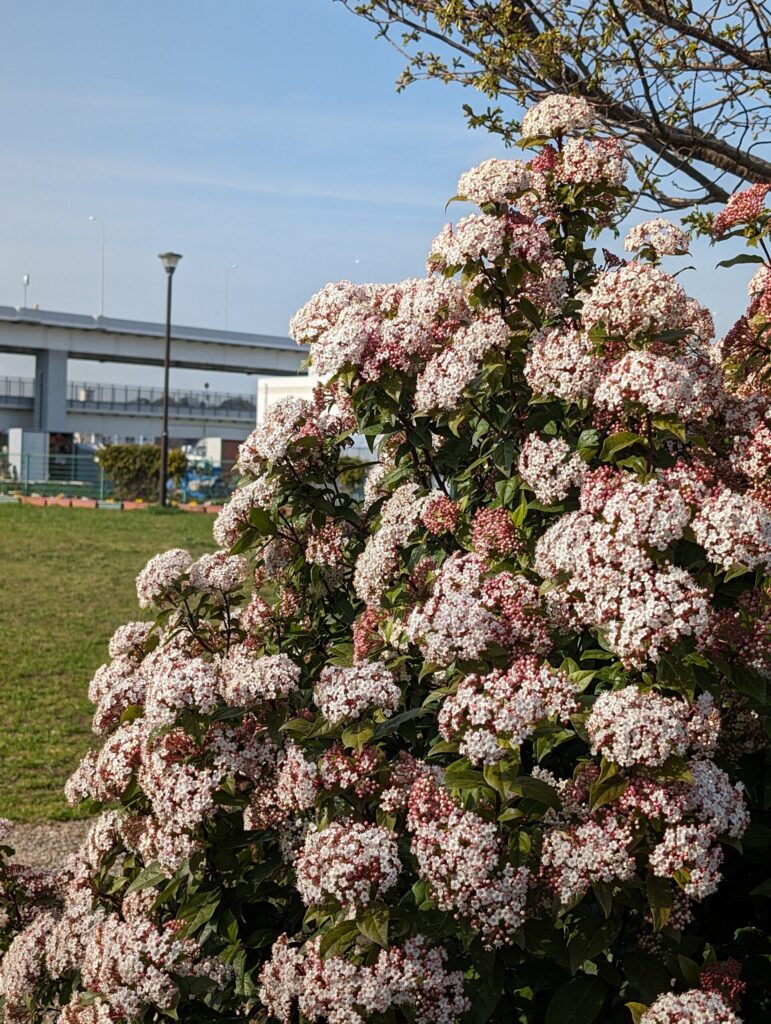
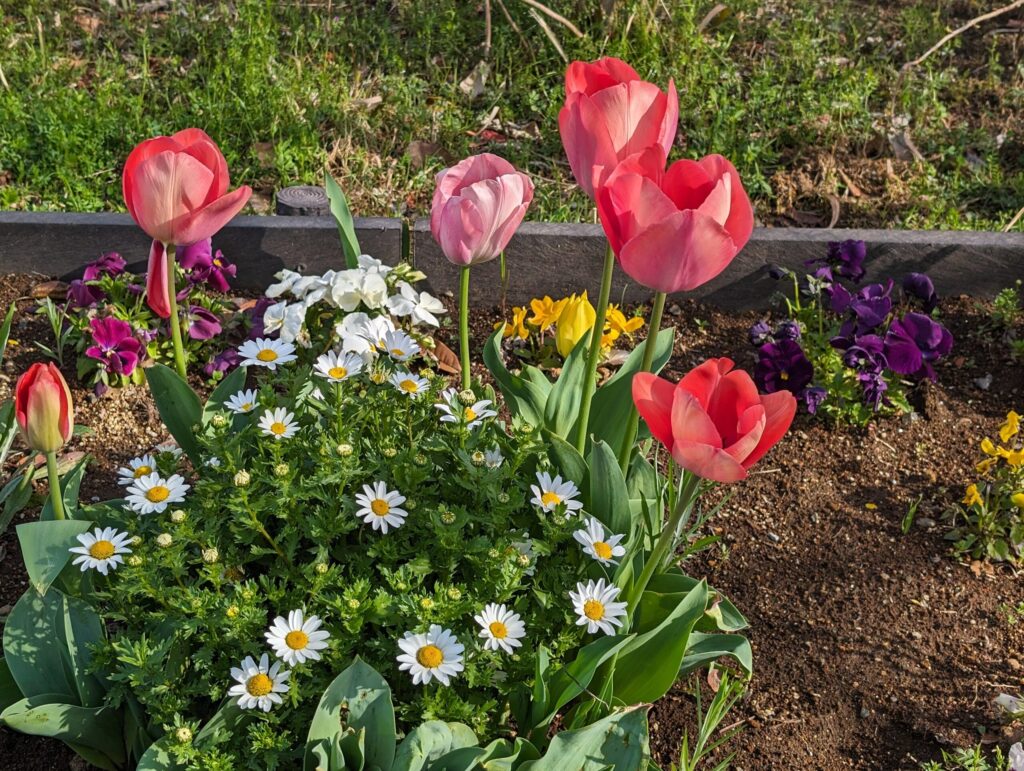
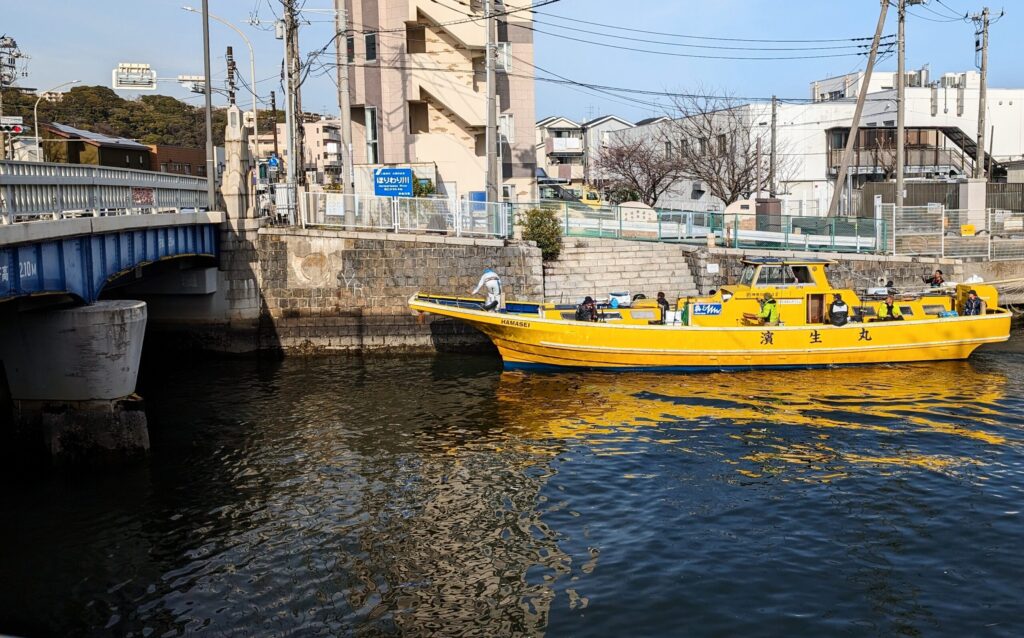
Alright, we’re heading back to Shinsugita Station by train. This is the terminal station for the Seaside Line, a route that loops around an industrial park, making it a station where many workers gather. Where there are lots of workers, you’re bound to find affordable, delicious izakayas more often. That’s one of the appealing factors for us.
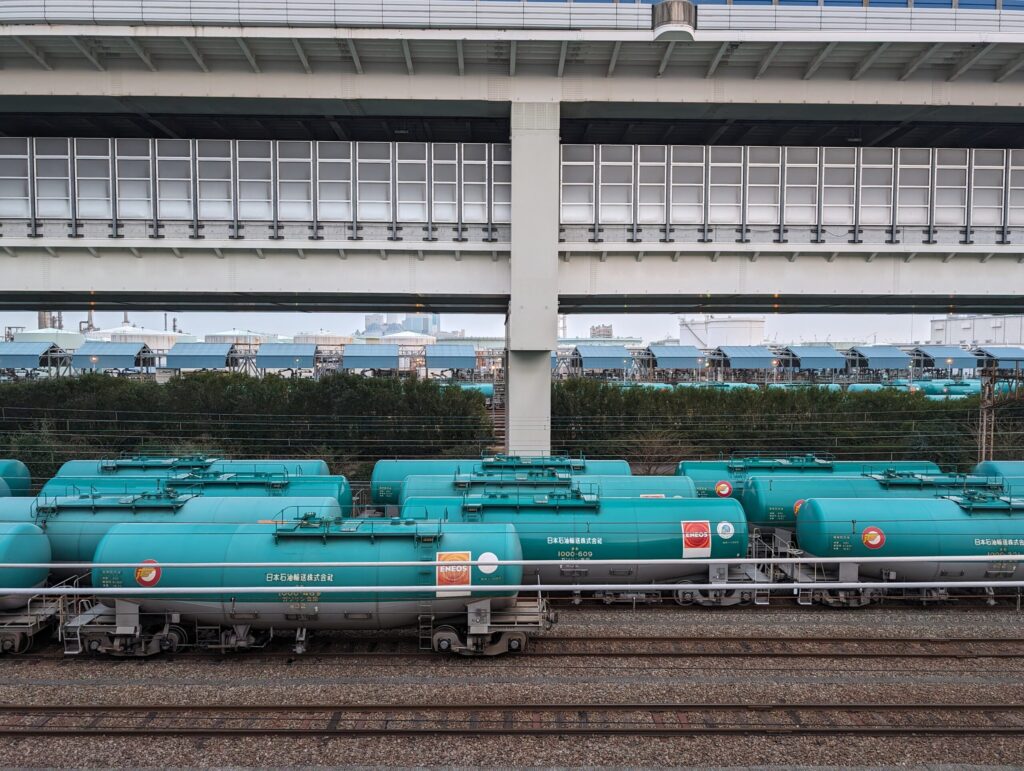
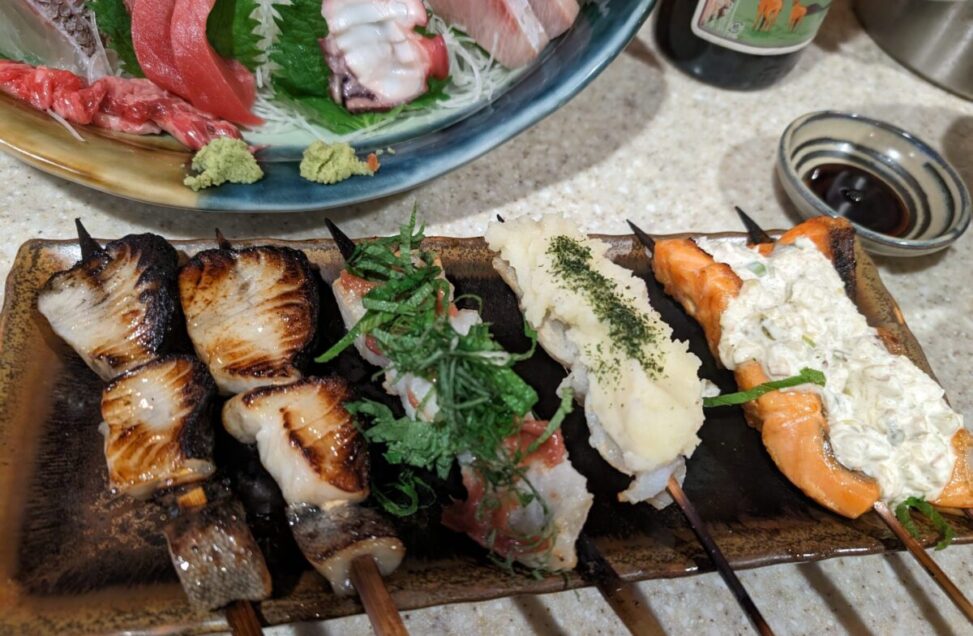
Tonight, we went to a fish-focused izakaya we’ve visited many times. We love this place so much, we’re thinking of moving to this town.
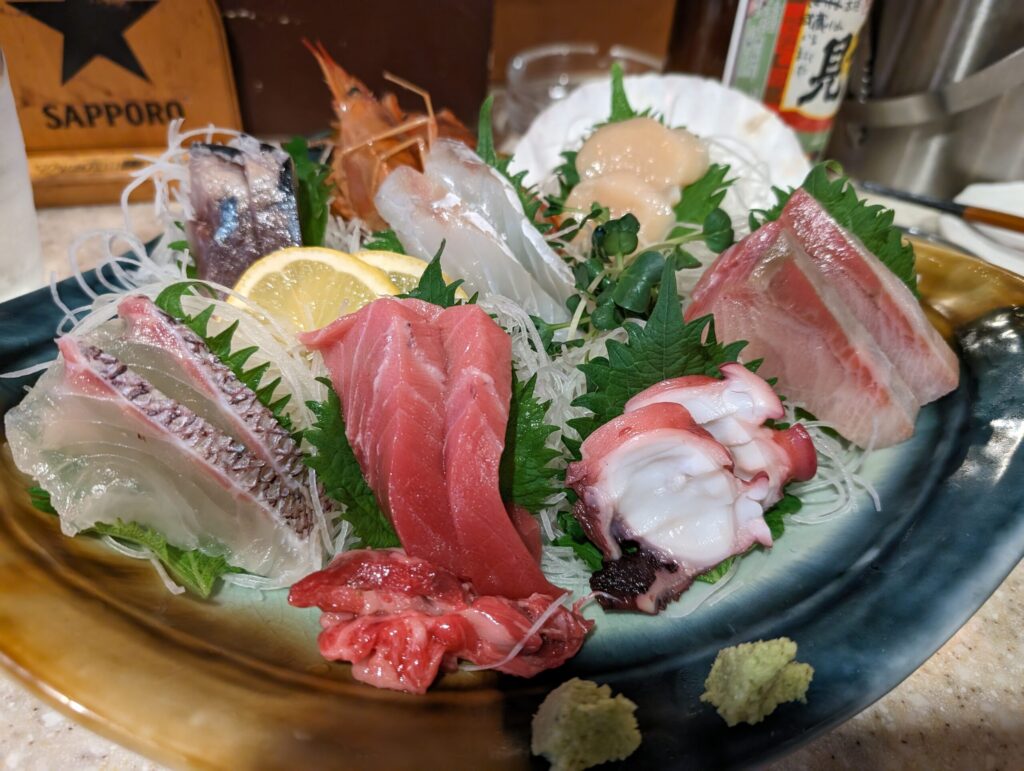
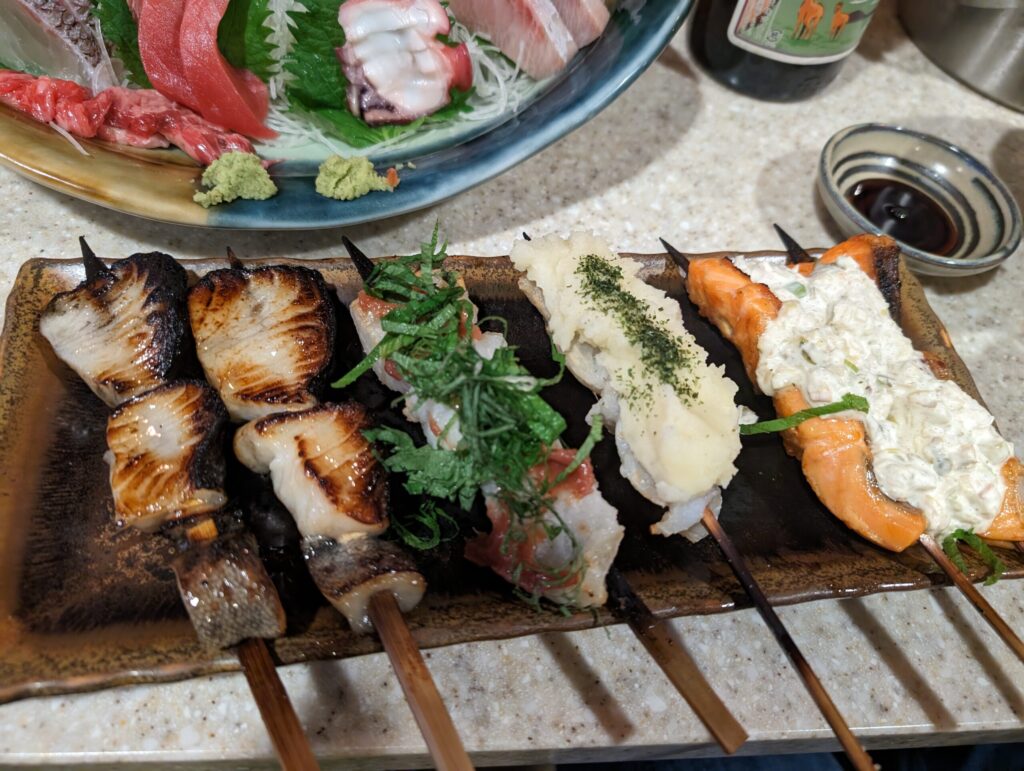
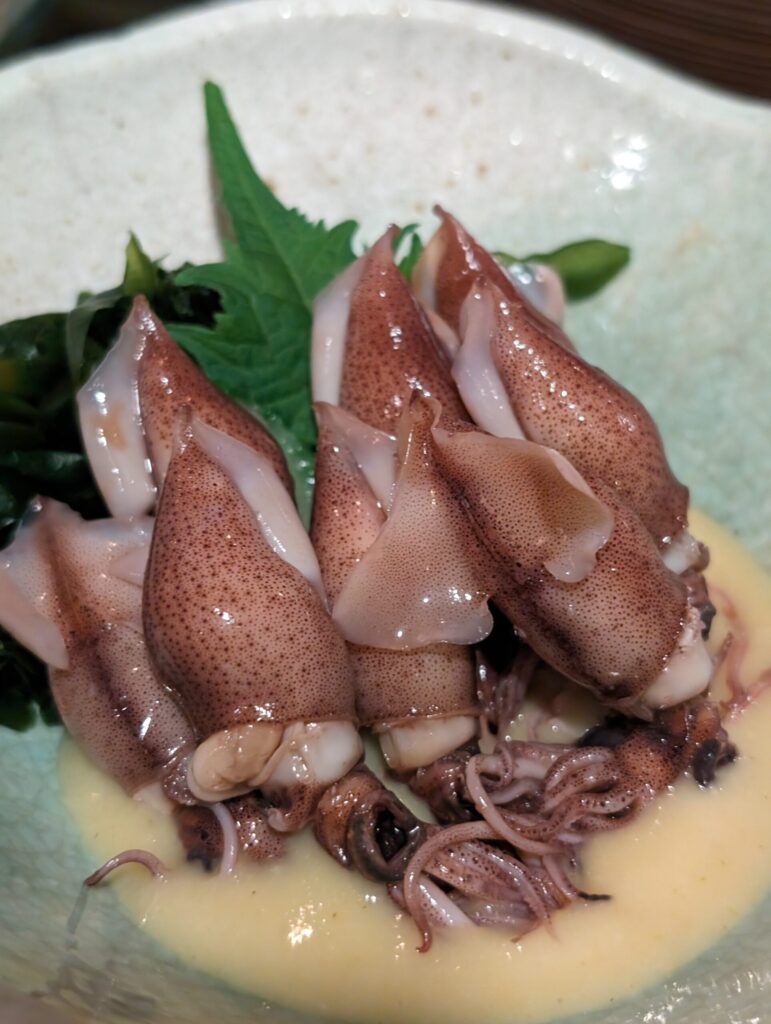
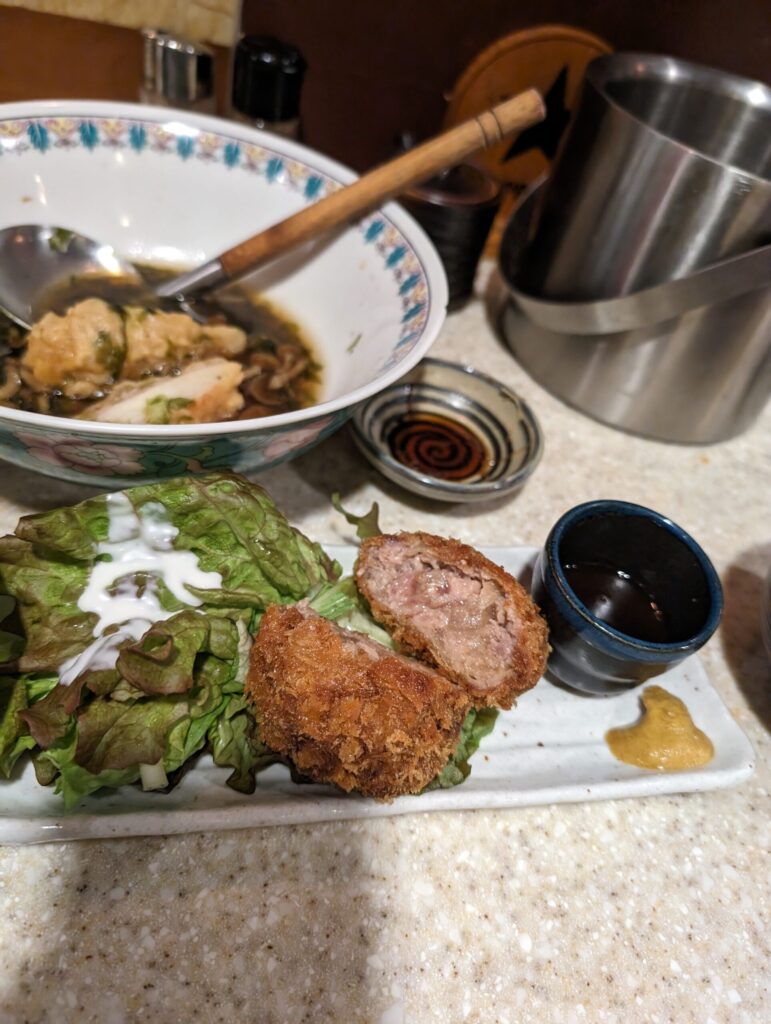
What’s amazing about this place is how they skewer delicious fish like yakitori and grill it for you. The owner apparently used to work in fish procurement, and each fish’s flavor really shines through – it’s delicious. And the prices are unbelievably cheap for Tokyo.
The owner directs young part-timers, frying tempura, grilling fish, slicing and plating sashimi, all while constantly answering reservation calls. Seeing his multitasking made me realize how easy desk work is, and I felt embarrassed.
We told the owner, “We’re thinking of moving here. Please keep this place going forever, don’t close it down.”
The owner smiled and said, “I won’t quit,” and I felt happy.
Running a shop is tough, and we don’t know what our future holds. One of us might get sick, or unexpected family events could happen. But I think it’s okay to dream.
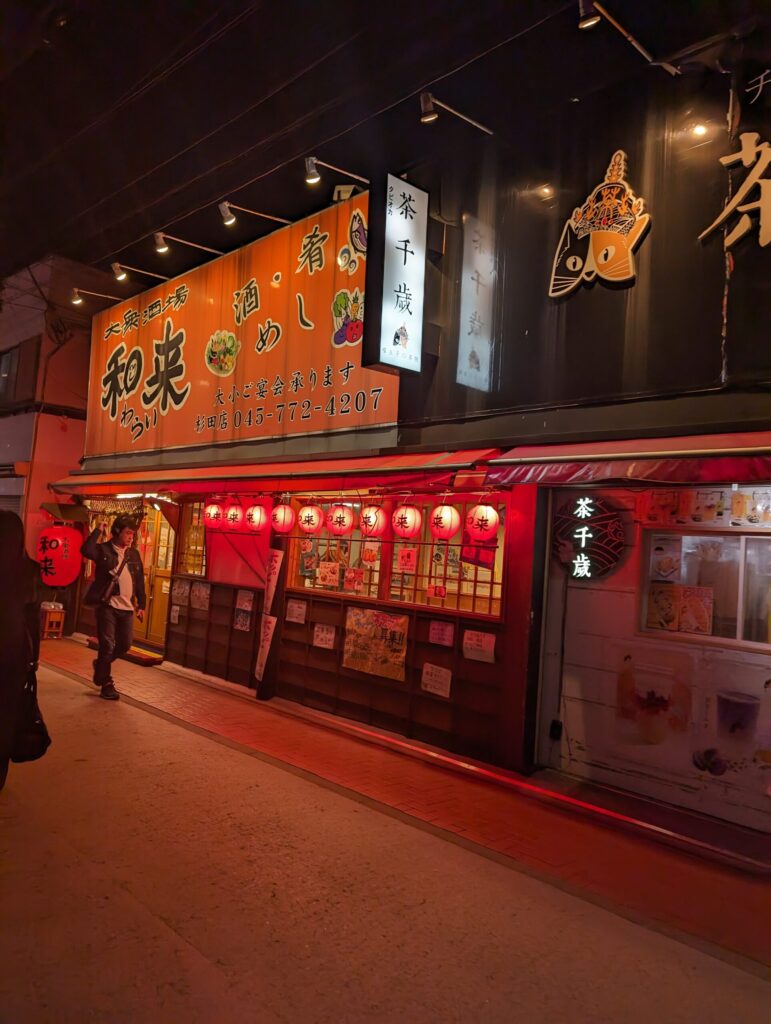
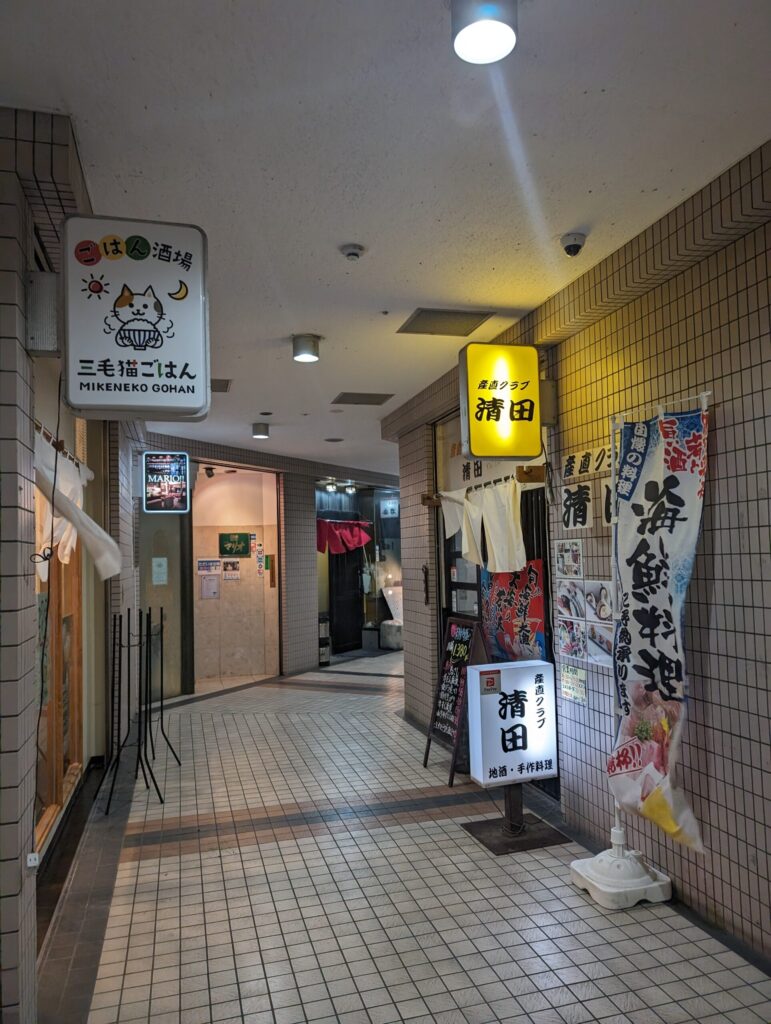
This area is sandwiched between JR Sugita Station and Keikyu Shinsugita Station. Like this, it’s full of casual izakaya bars.